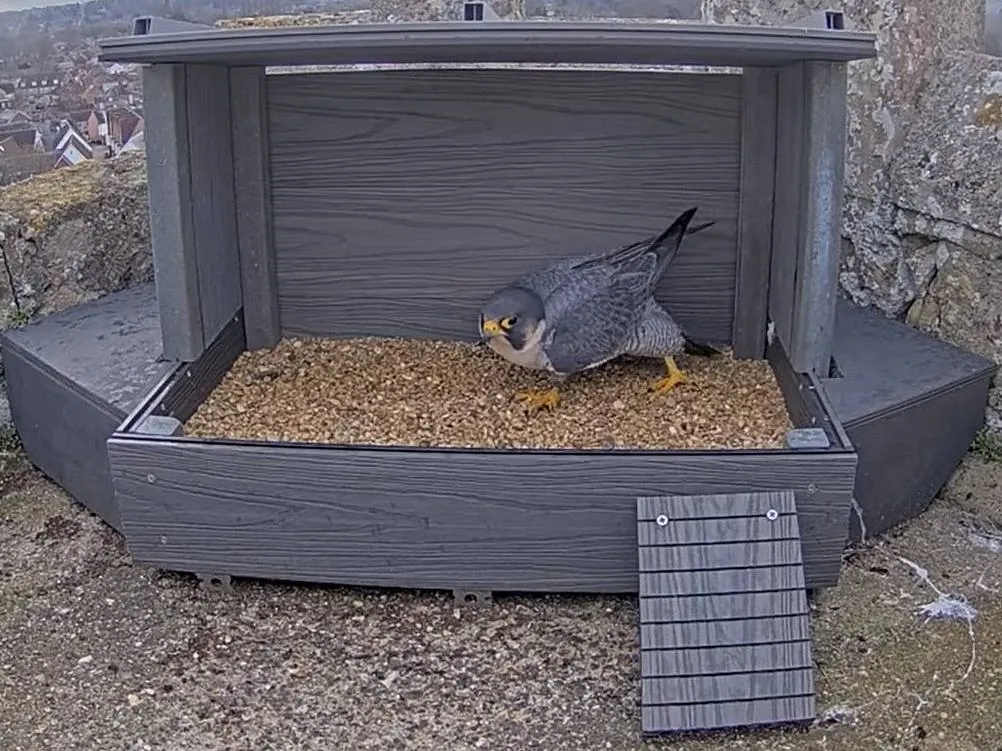
Romsey Abbey Peregrines
Watch Romsey Abbey Peregrines Livestream with Wildlife Windows
Peregrine Update 26th June 2026 - by Keith Betton Hampshire Ornithological Society
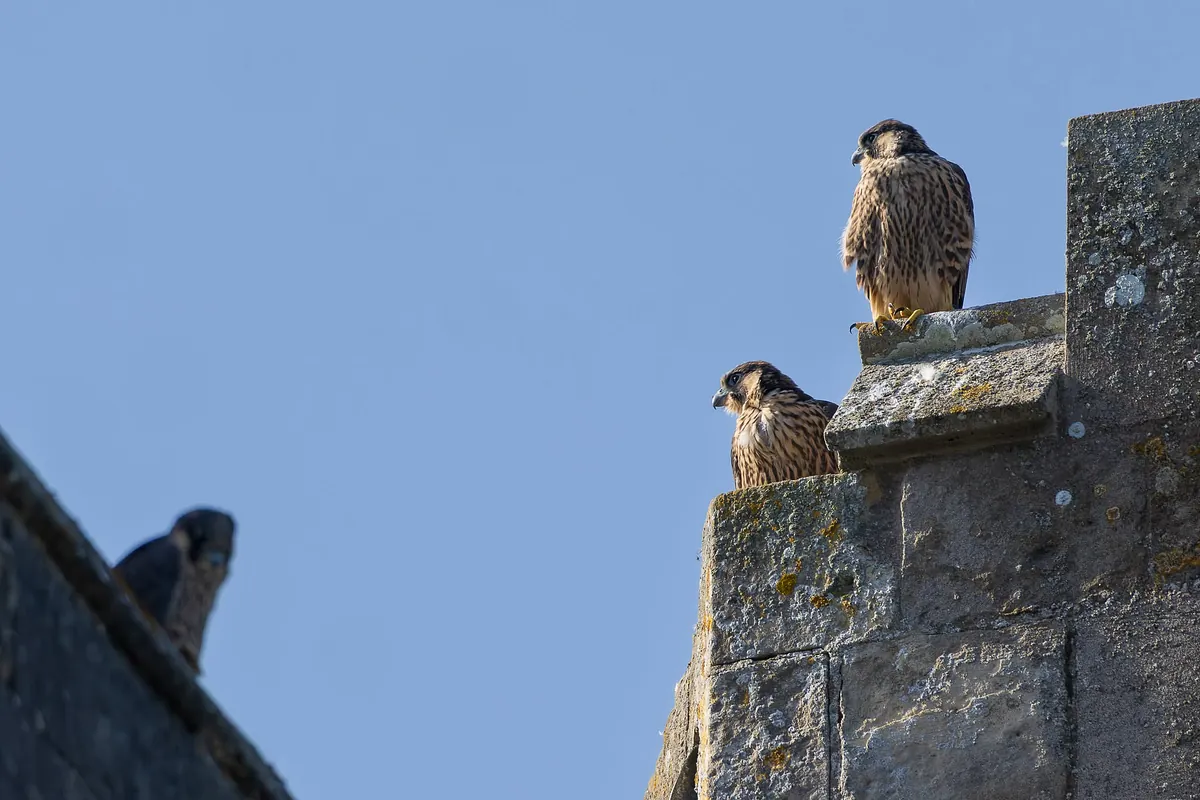
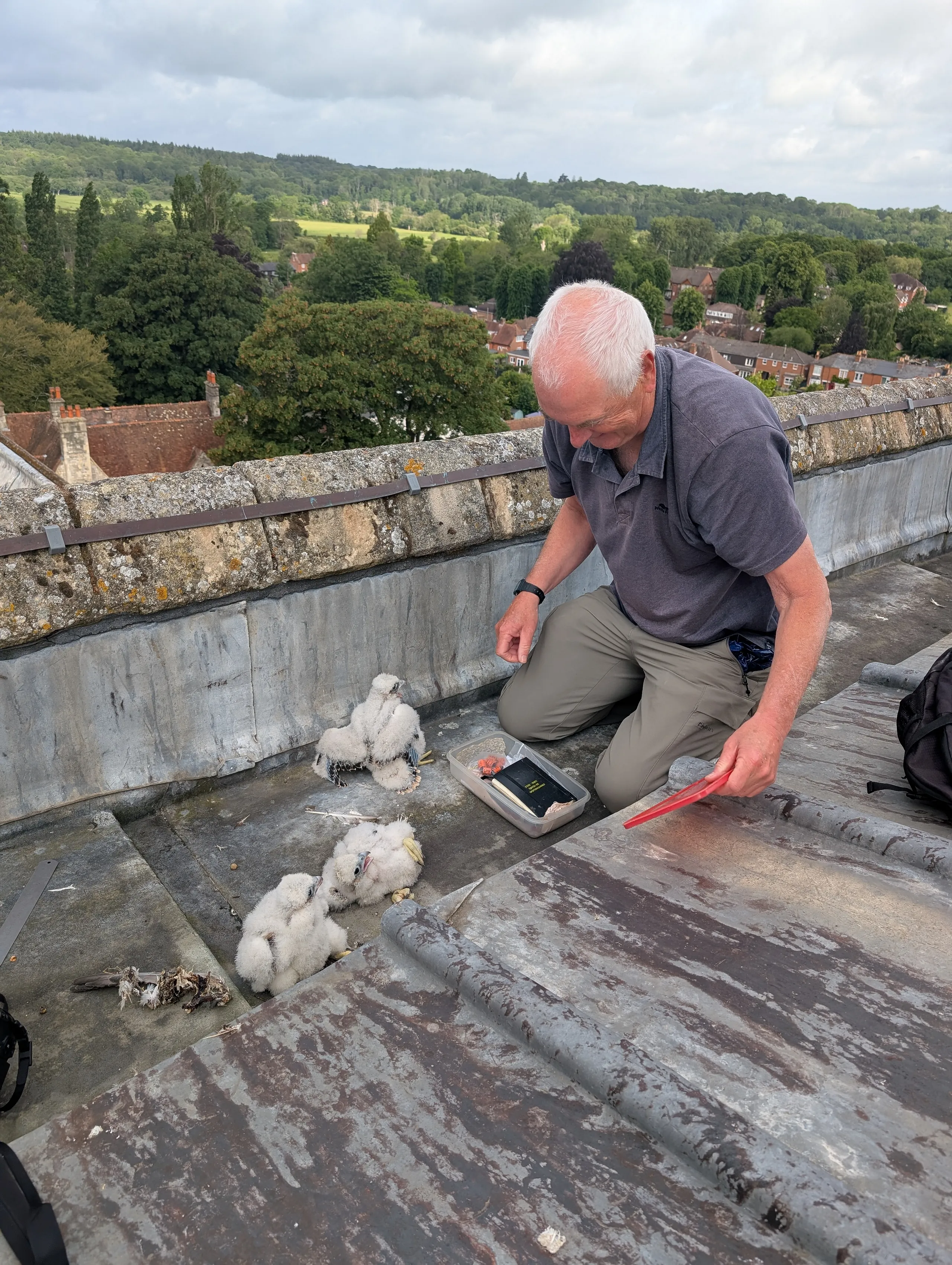
Only a few weeks ago, in early May, we were waiting for our chicks to hatch, and now we have all three of them clambering around the turret and nearby. Very soon they will be proficient flyers.
Once the chicks get airborne, they will get better at flying within days, but the first flights are always awkward, and often they end up on the ground. When this happens, they will often hide in a corner of a garden or the abbey grounds – so if you see one fall, or you find one somewhere nearby, do not try to pick it up (unless it is in immediate danger). Contact the Abbey staff to pass on your details and where the bird is, and they will ensure that someone on the Peregrine team is informed. Sadly, the parents will not feed a chick on the ground, so, unless help is found, that bird will not survive more than 48 hours.
On a happier note, very soon you’ll see them play-fighting in the air which helps them to improve their hunting skills. As they become more confident, they will join their parents on longer flights, and we may only see them in the evenings and early morning. Occasionally, we will see the parents try aerial foot-to-foot transfers of prey to their offspring. Often the food items will be dropped by the clumsy chicks and the adults will have to try and catch these before they hit the ground. But the young quickly become skilled at taking the food, often turning upside down beneath the parent at the moment of exchange. The young chase their parents with or without prey and they do a good deal of calling, and the intensity of the whine probably indicates the level of hunger!
We can also expect other birds such as Carrion Crows and Buzzards to be ‘buzzed’ both in the air and at rest by the chicks. These aerial games have an element of play but serve to develop the power of flight and the fine degree of coordination between sight and muscular response which is so necessary if the young Peregrines are to survive the critical few months when alone in the world.
At some point in the autumn, the chicks will each head off and will not return. They will go exploring in their first two years, and then from 2028 onwards they will be ready to breed. Almost always they settle somewhere at least 20-30 miles away – as did their father, who started life in New Milton. Then the cycle will hopefully start again with our resident pair getting ready to nest again in 2027.
(Image of 3 Juveniles by Mark Taylor)
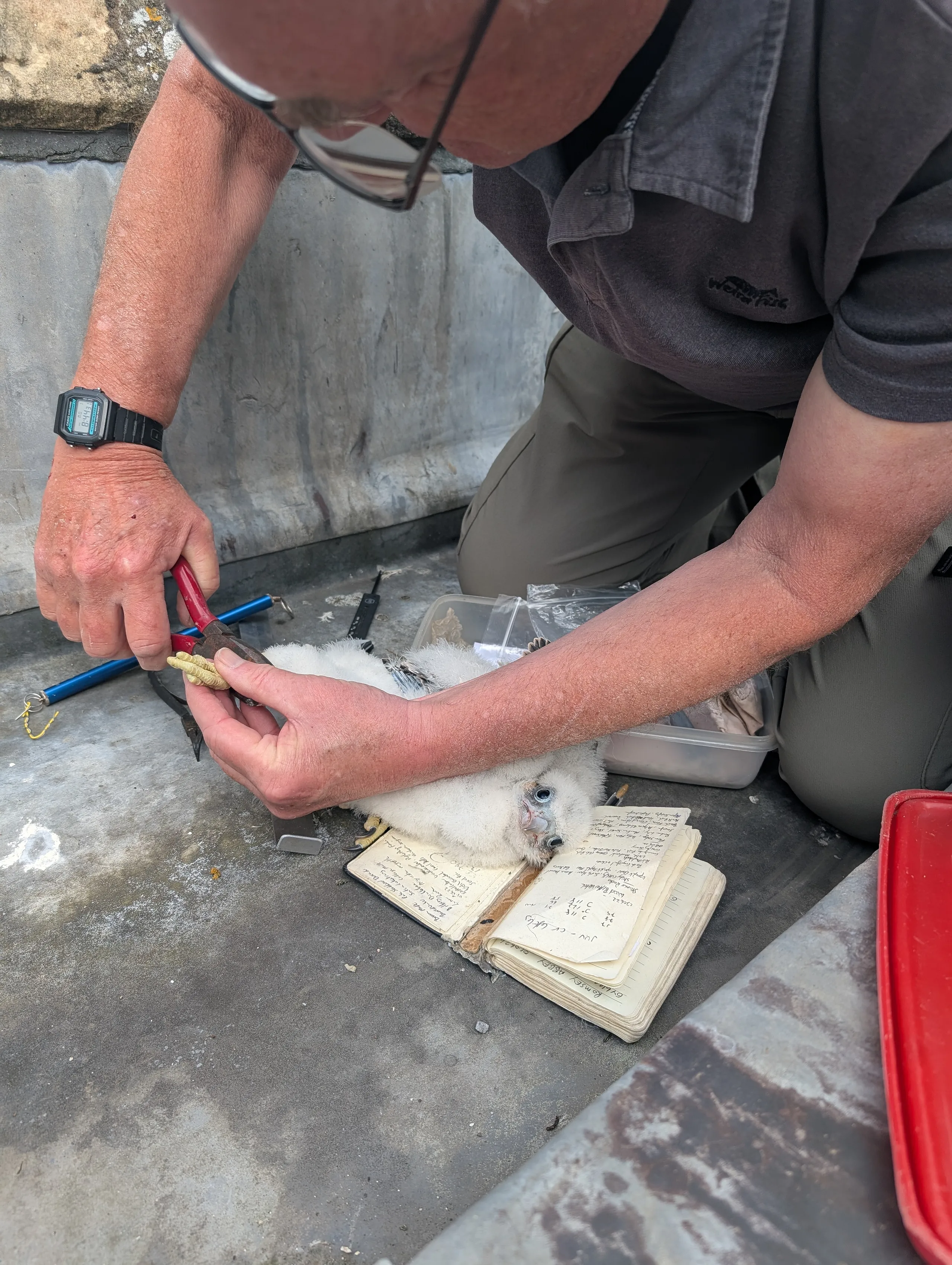
Chicks ringed 1 June 2026
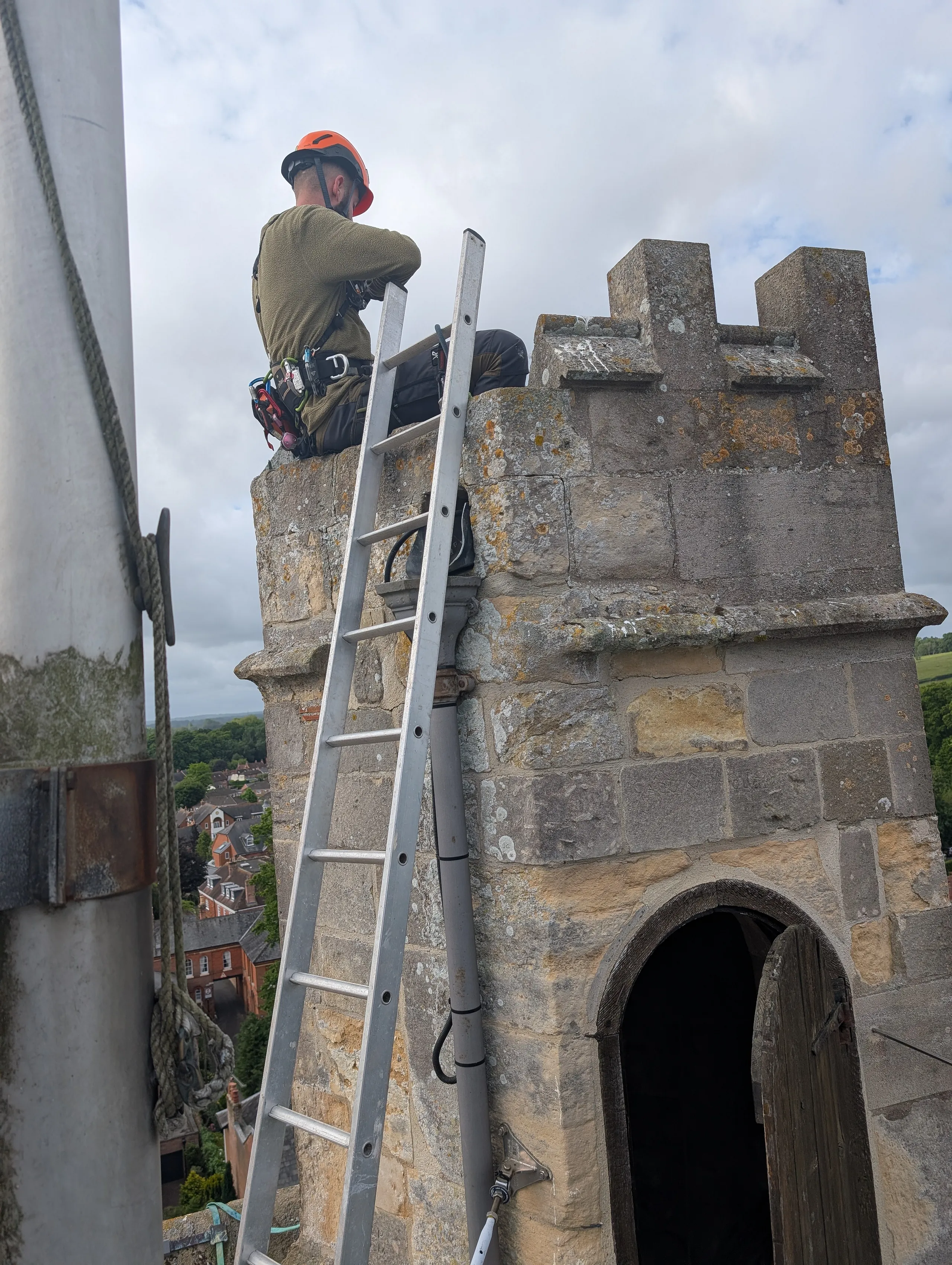
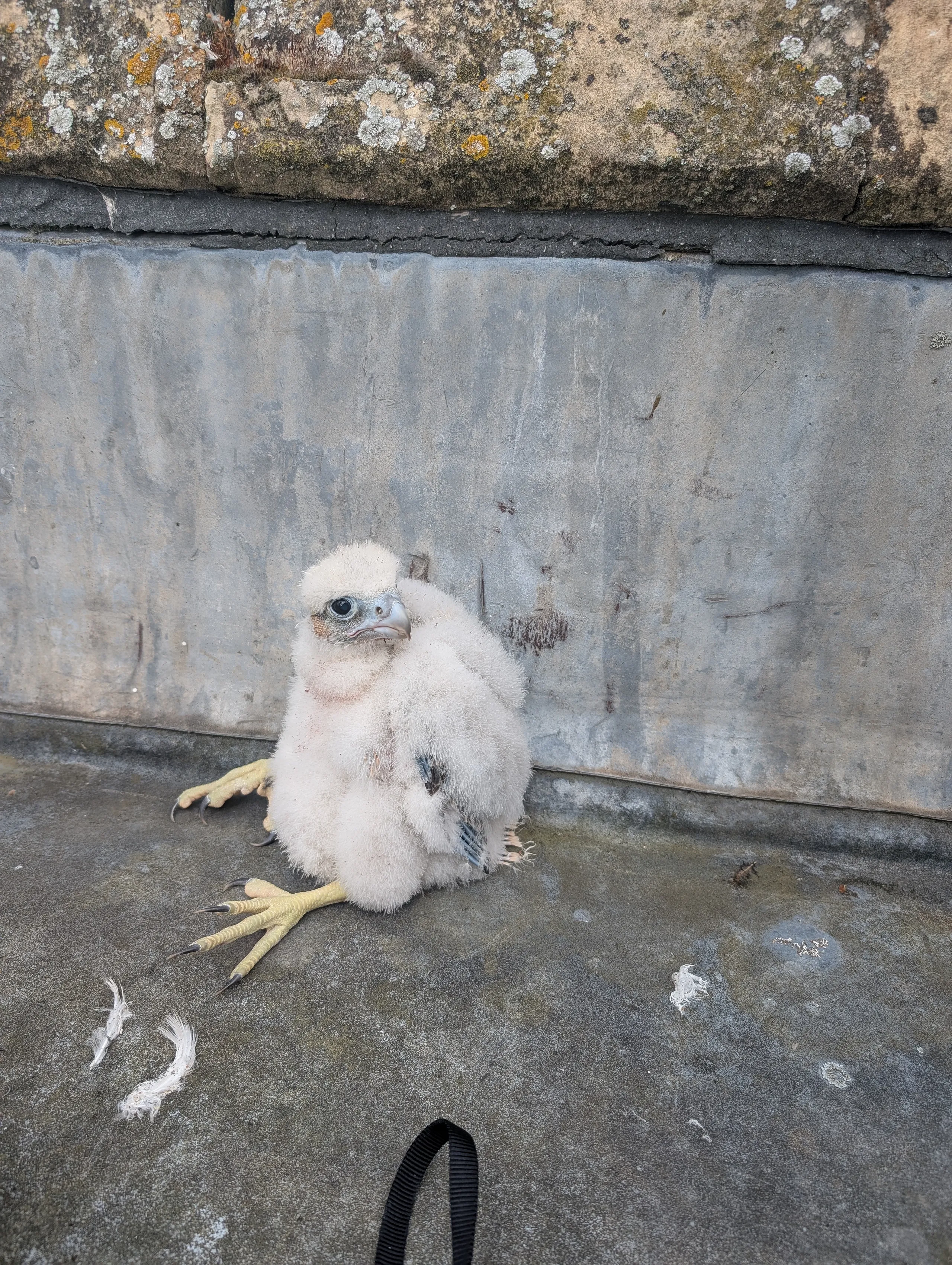
Today our 3 peregrine chicks were successfully ringed by Nigel Jones and Tom Saunders. We have 2 males and 1 female.
Details of the rings:
Male: Metal ring: GY61441, Colour Ring: 3LJ
Male: Metal ring: GY61442, Colour ring: 37J
Female: Metal ring: GY61443, Colour ring: 3TJ
Update - 9 April 2026
The female has laid three eggs in the nesting tray, on 3 April, 5 April and 8 April. The female is now on the next 90% of the time, including overnight, but the male does take his turn at incubation to give the female a break from time to time.
Update - 20 March 2026
On 16 March, a new adult male mated with our female. Hampshire Ornithological Society has identified him as a peregrine born in New Milton in 2020 (the same year as her late male). Things are progressing well with plenty of courtship.
The juvenile male has not been seen around the Abbey for a few days.
Sad news - 12 March 2026
Today we were sad to hear that our regular adult male Peregrine died in a collision with a vehicle just outside Romsey. He had dropped a prey item and was trying to retrieve it when the collision occurred. He was born at St Mary’s Church, Andover in 2020 and came to the Abbey two years ago when his nesting attempt with the female ended when their nest was affected by rain. Last year they nested on the side of the abbey in a gully.
This spring both he and the female had been seen mating, and the presence of one of their male chicks from 2025 was beginning to cause problems, with both him and the young male showing signs of aggression to each other. Now he has died it is possible that the young male will stay around to take his father’s place. He is too young to breed until 2027, but if his mother is already carrying eggs and continues to lay them, he may well take on the role of a helper. We will keep you informed as things progress.
Keith Betton - Chair of Hampshire Ornithological Society
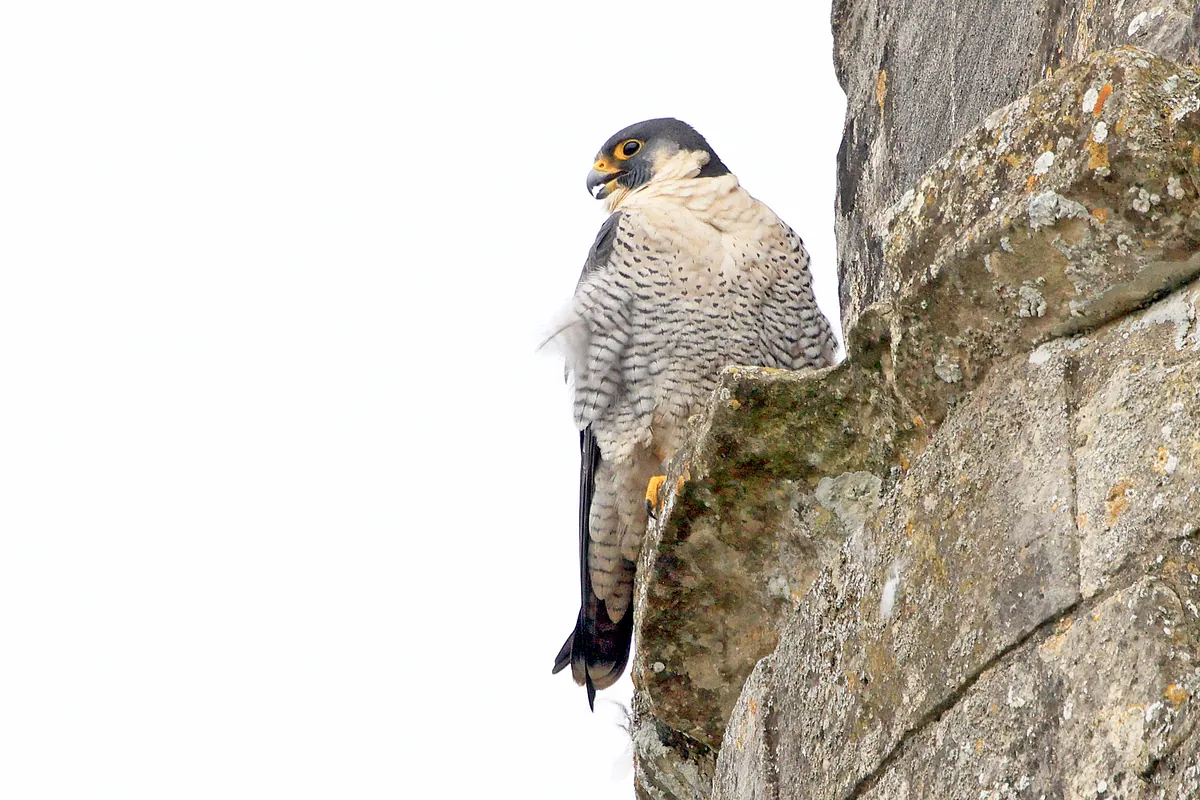
Image of male Peregrine Falcon 17 March 2025 - Richard Jacobs
February 2026 - Update
Jason from Wildlife Windows has been back and installed a second camera to watch the nesting tray where the birds successfully reared 4 chicks in 2025.
If and when the pair decide to breed and chose which tray to use, we will switch the YouTube feed to that tray.
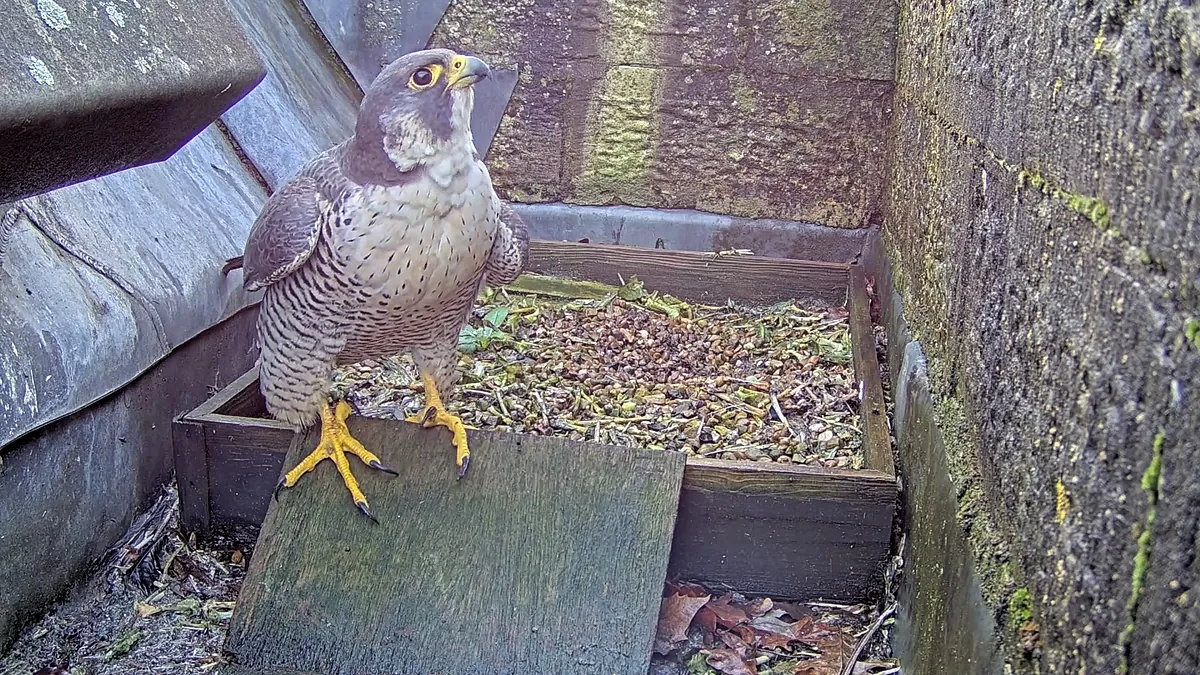
We were delighted when in 2024 a pair of peregrines laid eggs in the south turret of the Abbey, but sadly the eggs did not hatch. With generous donations from Romsey and District Society and Romsey Town Council, a splendid new nesting tray with webcam was installed for the 2025 season, and our peregrines returned but, despite showing early interest in the new tray, they chose to nest in an old tray in the gulley at the west end of the Abbey. There they successfully raised four chicks. See last year's reports here.
The parents are still active around the Abbey in early 2026. The female has visited both trays, doing some nest scraping at both. She is clearly undecided as yet where to nest this year. With funding from Romsey and District Society and the Friends of Romsey Abbey a second webcam has now been installed for the west end gulley site, so we should be able to follow developments whichever site the peregrines choose.
Watch this space!